Budget Porsche 924S EV Conversion: How Karl Built a Leaf-Powered Sports Car for Around $20K
There is something quietly radical about a 1988 Porsche 924S that sits in a parking lot making no sound until it launches, and then it just pulls. Karl Nichols built exactly that, and when I caught up with him at the State of Charge conference in Denver, Colorado, the car looked like it had rolled out of a factory that never existed…a factory where Porsche and Nissan somehow agreed to share parts.
This is the story of a budget-friendly EV conversion that punches well above its price tag, runs about 200 miles on a charge, and can hit 60 mph in around five seconds. And it was built by one guy in a garage and a half in Taos, New Mexico.
How Karl Picked Up a 1988 Porsche 924S for Next to Nothing
The car itself has a story before the conversion even begins. The 924S had been sitting in the backyard of a mechanic's shop for about 15 years. The shop had changed ownership, nobody knew the history of the car, and the original owner had passed away years earlier. The car just stayed there. Karl made a deal on it at a very reasonable price, and because it came out of New Mexico, it was completely rust free. That matters a lot when you are planning to put serious work into a body.
The 924S was the final year of that particular Porsche model line. Compared to its siblings, it tends to fly under the radar, which is part of what makes it such a smart candidate for a conversion. The platform is solid, the body is clean and low, and the price of entry for a good example is a fraction of what you would pay for a 944 or a 911.
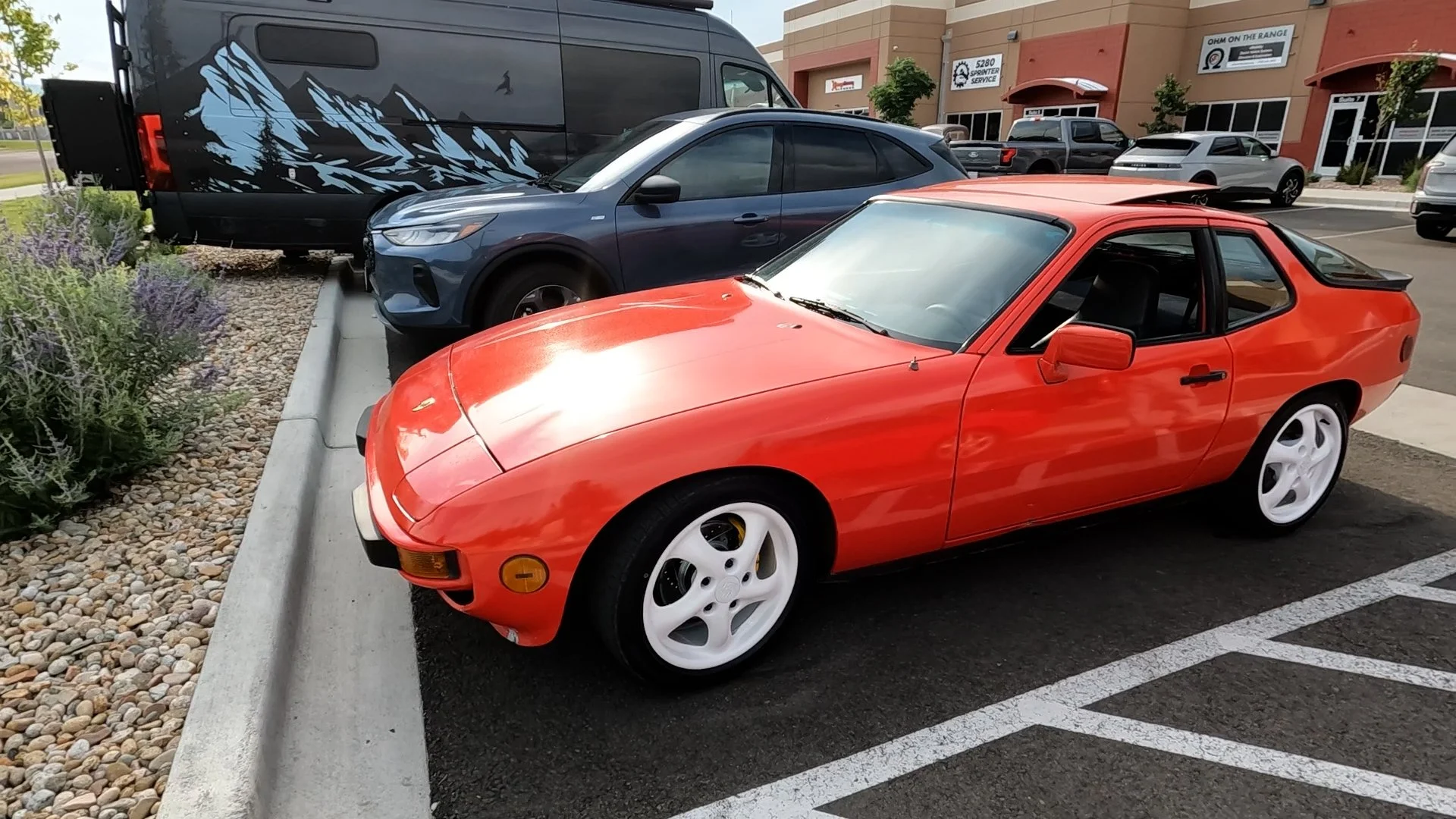
The type of deal we all dream about
Why the Nissan Leaf Makes an Ideal Donor Car for DIY EV Conversions
Karl's goal from the start was to keep this build budget friendly, and that decision shaped everything. Working with Jimmy over at EVSwap Conversions, he was pointed toward the Resolve EV controller, which is specifically designed to work with the Nissan Leaf drive system. That includes the motor, the BMS, the battery pack, and the charging system. Everything comes together as a matched set, which eliminates a lot of the guesswork and custom fabrication that makes EV conversions expensive.
Karl found a 2023 Nissan Leaf with only 8,000 miles on it. It had the larger motor and the bigger battery pack, so he pulled everything out and got to work figuring out how to fit it into the Porsche. Using the Leaf as a donor is a smart move for anyone looking at a budget EV conversion. The parts are widely available, they work together reliably, and the Resolve controller makes integration straightforward compared to sourcing components individually.
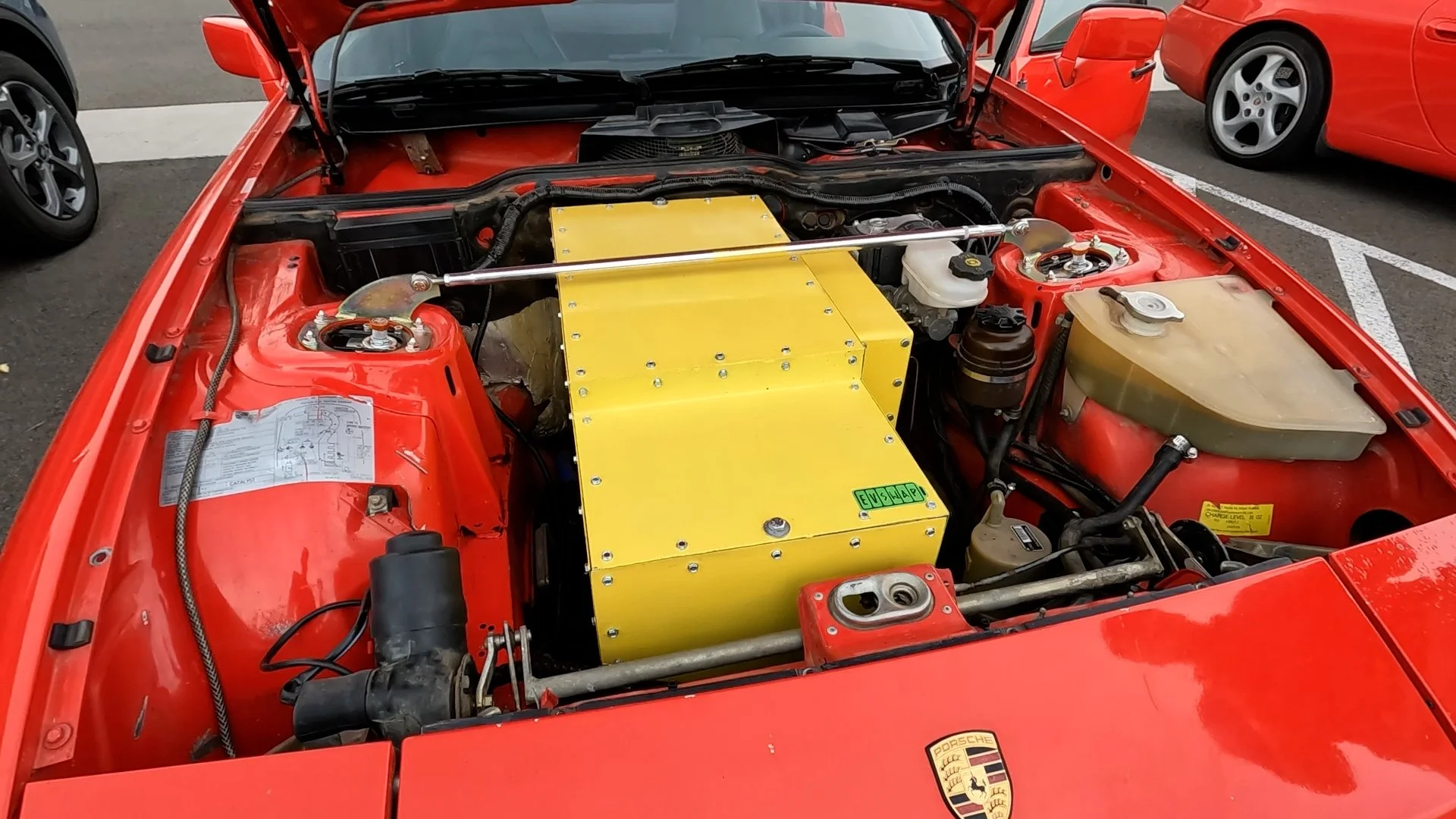
No more motor but nobody really cares when the torque hits
What Lives Under the Hood and Behind the Rear Seat
Pop the hood on this car and there is no engine. That space now holds the front battery box, the high voltage relay system, and the BMS on the back side of the assembly. The second half of the battery pack lives where the rear seat used to be, with four of the largest Leaf modules across the back and four of the smaller modules mounted above where the motor now sits.
The Nissan drive unit includes an 8-to-1 reduction gear, so there is no separate transmission in this build. Karl merged the Nissan axles with the Porsche axles and upgraded to heavier duty CV joints to handle the torque. The result is a drivetrain with no vibration, smooth power delivery, and none of the mechanical noise associated with a traditional gearbox.
For brakes, Karl added a Tesla power braking system, which he calls one of the best decisions he made on the whole build. He also rebuilt the factory Porsche calipers so everything was in proper working order before the Tesla system went in. The stopping power is noticeably improved over the original setup.
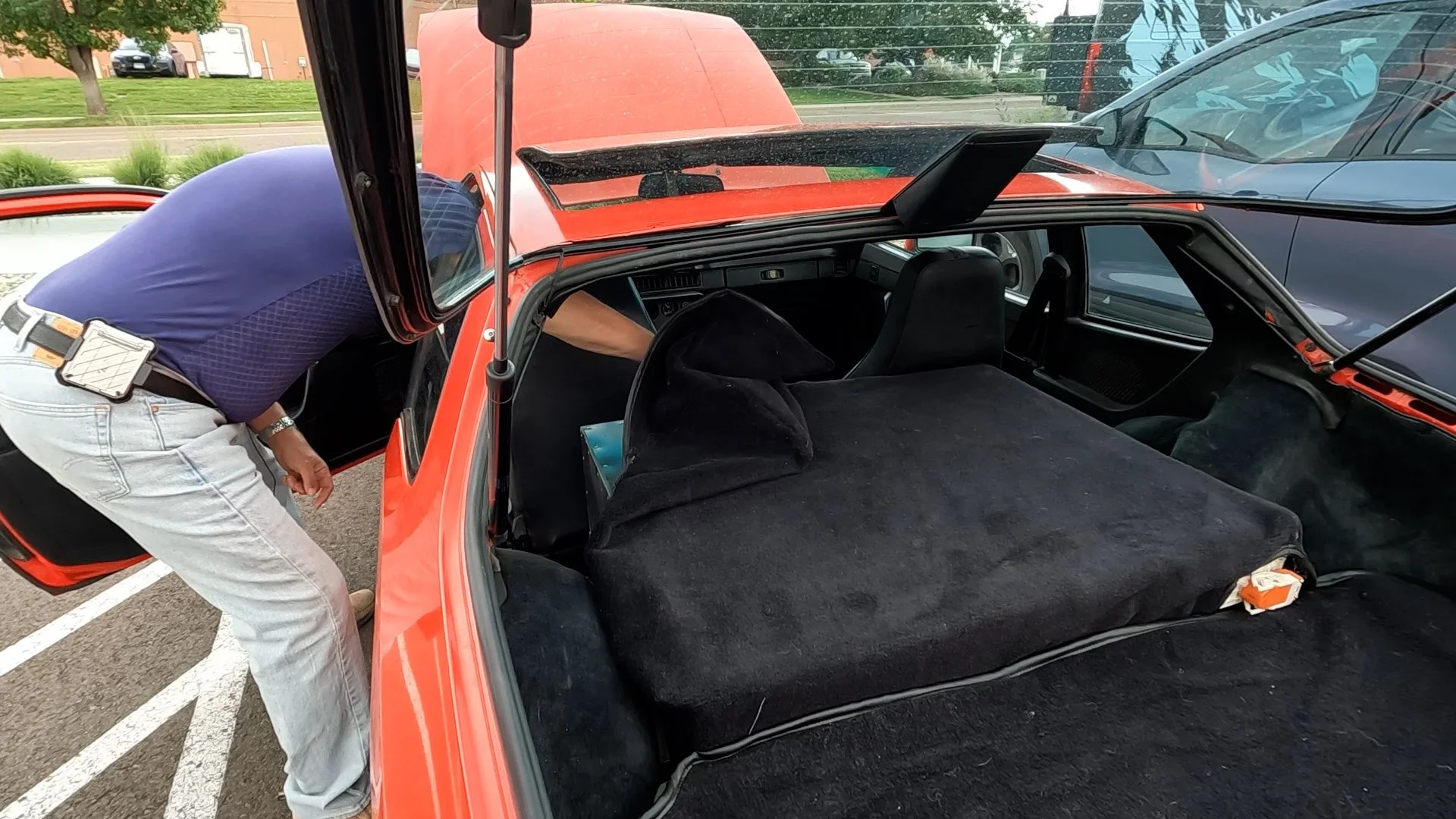
Karl had carpet made to tie the interior together
Getting the Suspension Right After Adding 700 Pounds of Batteries
The raw battery modules weighed over 700 pounds, and putting the bulk of that weight in the rear of the car shifted the balance significantly. The stock 50/50 weight distribution moved to roughly 60 percent rear, and when Karl first drove it, the back end was sagging badly on the original suspension.
The fix was a set of fully adjustable coilovers paired with Swift Springs sourced through a California company. Karl sent them the corner weights for the converted car and they matched the spring rates to the actual load. He pulled the original torsion bars and replaced the whole setup. Once it was dialed in, the car stopped sagging and started handling the way a sports car is supposed to. Wheel and tire sizes stayed close to the factory spec at 17 inches, with nine-inch-wide tires in the rear and seven-inch fronts.
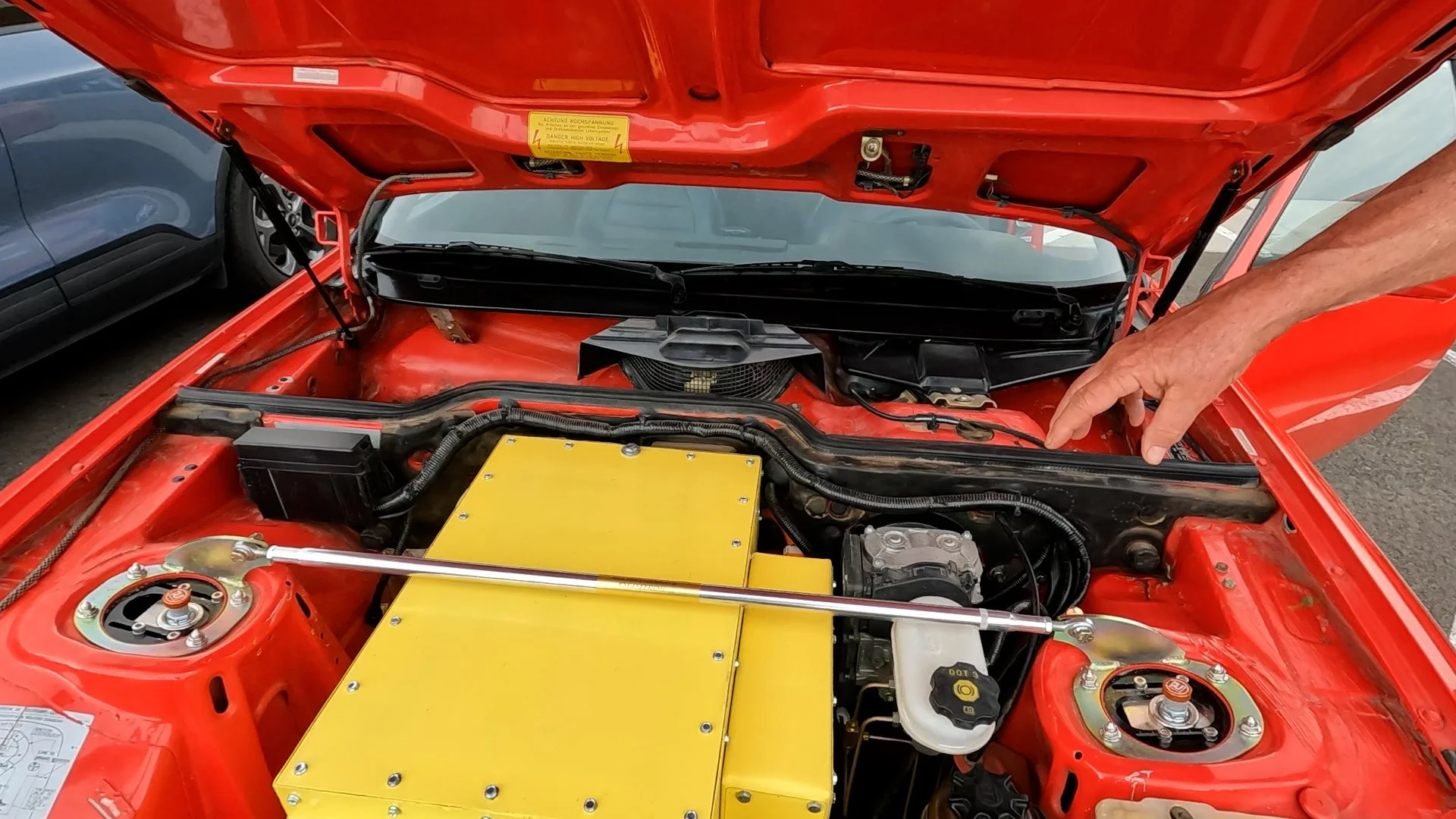
Coilovers and custom spring rates account for the extra battery weight
Real World Range and What It Is Like to Drive a Leaf-Powered Porsche
Karl drove this car from Taos, New Mexico to Denver, Colorado for the State of Charge conference, stopping only twice to charge on public infrastructure. Highway range on this build runs around 200 miles. Around town, with the regenerative braking helping recover energy, he gets a little more. The regen is adjustable, too. Karl can set it to coast, set it to moderate regen, or dial it all the way up to one-pedal driving depending on the situation.
Getting into the car, the interior still feels like a Porsche from 1988. Karl sourced a European 12-volt gauge to replace the repurposed oil pressure gauge, got the clock working again, and swapped in a Momo steering wheel because the original rubber had hardened over the decades. The dashboard still reads like the original, which is exactly the point. The car is tasteful and it is finished, not a rolling project.
Zero to 60 comes in around five seconds. That is nearly twice as fast as the stock 924S ever was, and you feel every bit of it. The instant torque from the Leaf motor means the car just goes when you ask it to, with none of the buildup you get from a combustion engine. About 1,500 miles in since the build was completed, and not a single trouble stop.
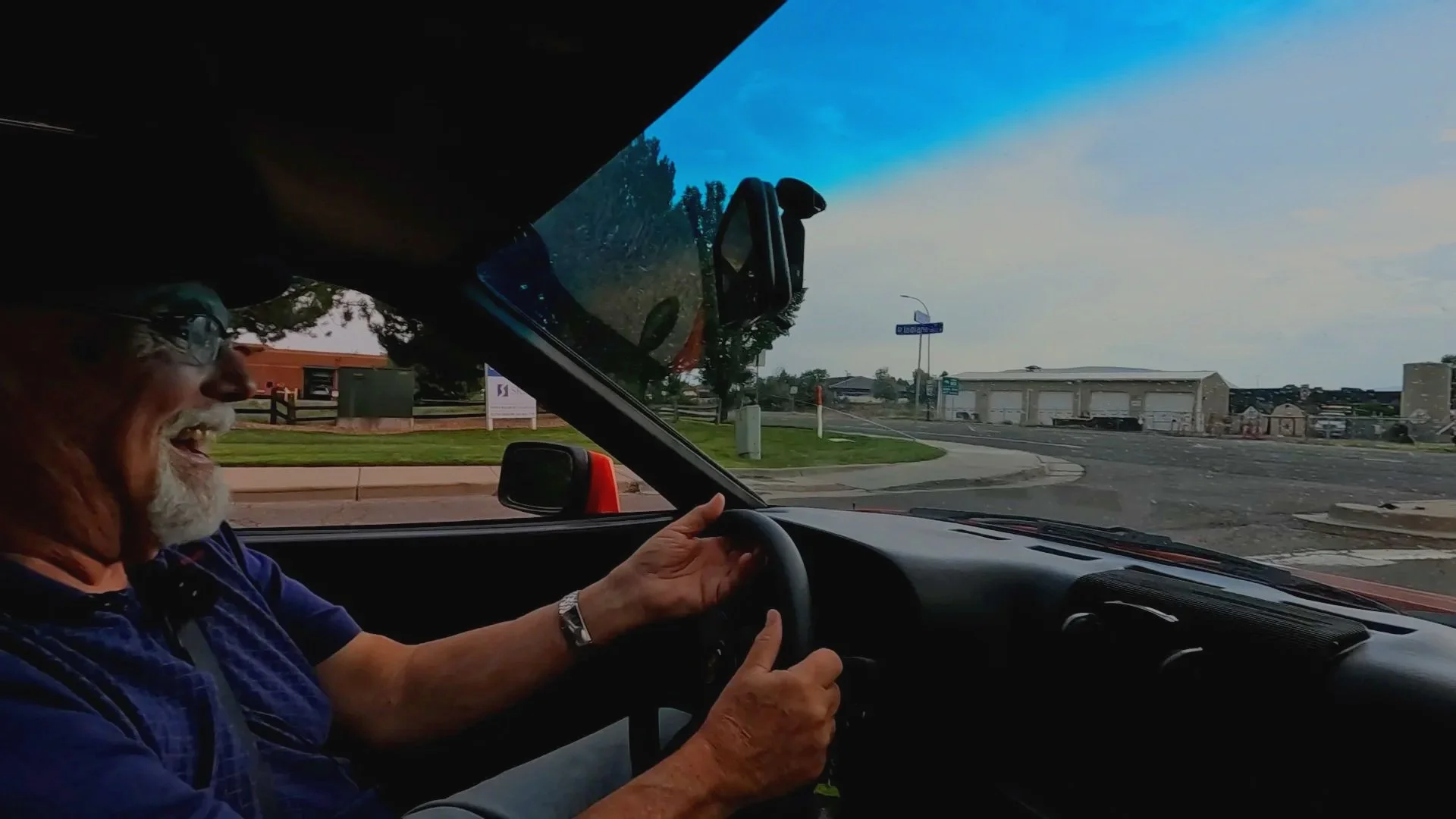
Launching an EV absolutely never gets old
What a $20K Porsche EV Conversion Tells Us About Where This Hobby Is Going
Karl built this car alone, in a garage and a half, sourcing used parts and leaning on a community of people who have figured out that donor cars like the Nissan Leaf make this kind of thing accessible. The total build cost came in around $20,000, which is a number that tends to surprise people who assume EV conversions require a professional shop and a commercial budget.
What it actually requires is patience, some fabrication skill, the right controller, a good donor, and a willingness to call a spring company and explain that yes, the rear is heavy because of the batteries. The tools exist. The knowledge is out there. And the result is a car that turns heads, covers real distance, and makes a very good case that the next great era of car culture is already underway.