This $20K Homemade EV Beat 200 Teslas at Autocross. Meet the Apex Cricket.
When Phil and Dave pulled up to their first autocross event in an electric car they built themselves, people laughed. The Apex Cricket, a tube-frame open-wheel EV built on a Nissan Leaf drivetrain and C5 Corvette suspension, looked like something between a go-kart and a race car. It weighed 1,700 pounds. It was street legal. And once it launched off the line, nobody was laughing anymore.
I caught up with the father-son team behind the Cricket at a Northern California autocross event to talk through the build, the engineering decisions, and what it actually feels like to drive something this unconventional on both a race course and a public road.
From Wish List to Workshop Floor
The build started the way a lot of great projects do: an impulse purchase. Thunderstruck Motors, based in Santa Rosa, had put a Nissan Leaf motor and controller kit on sale over the holidays. Dave bought it without a firm plan. The motor sat on a wish list, then on a shelf, until the world shut down in early 2020.
With the materials already on the shop floor and a suddenly empty calendar, the build came together over the following seven or eight months. The chassis they designed is based on the same concept as a two-seat sprint car they had built twelve years earlier with a Corvette drivetrain, but this time it was wider, longer, and purpose-built for the Leaf's electric motor. Phil and Dave designed the frame themselves in AutoCAD, plotting all of the C5 Corvette suspension pickup points in three-dimensional space after pulling the data from a suspension tuning program online.
The welding went to a shop in Loomis called Hot Metal Fab. Dave tacked the frame himself, then brought it in for professional finishing. The shop took about a month, welding in sections to prevent warping. It was the kind of care that shows up later, when a car is doing things its builder never quite expected it to do.
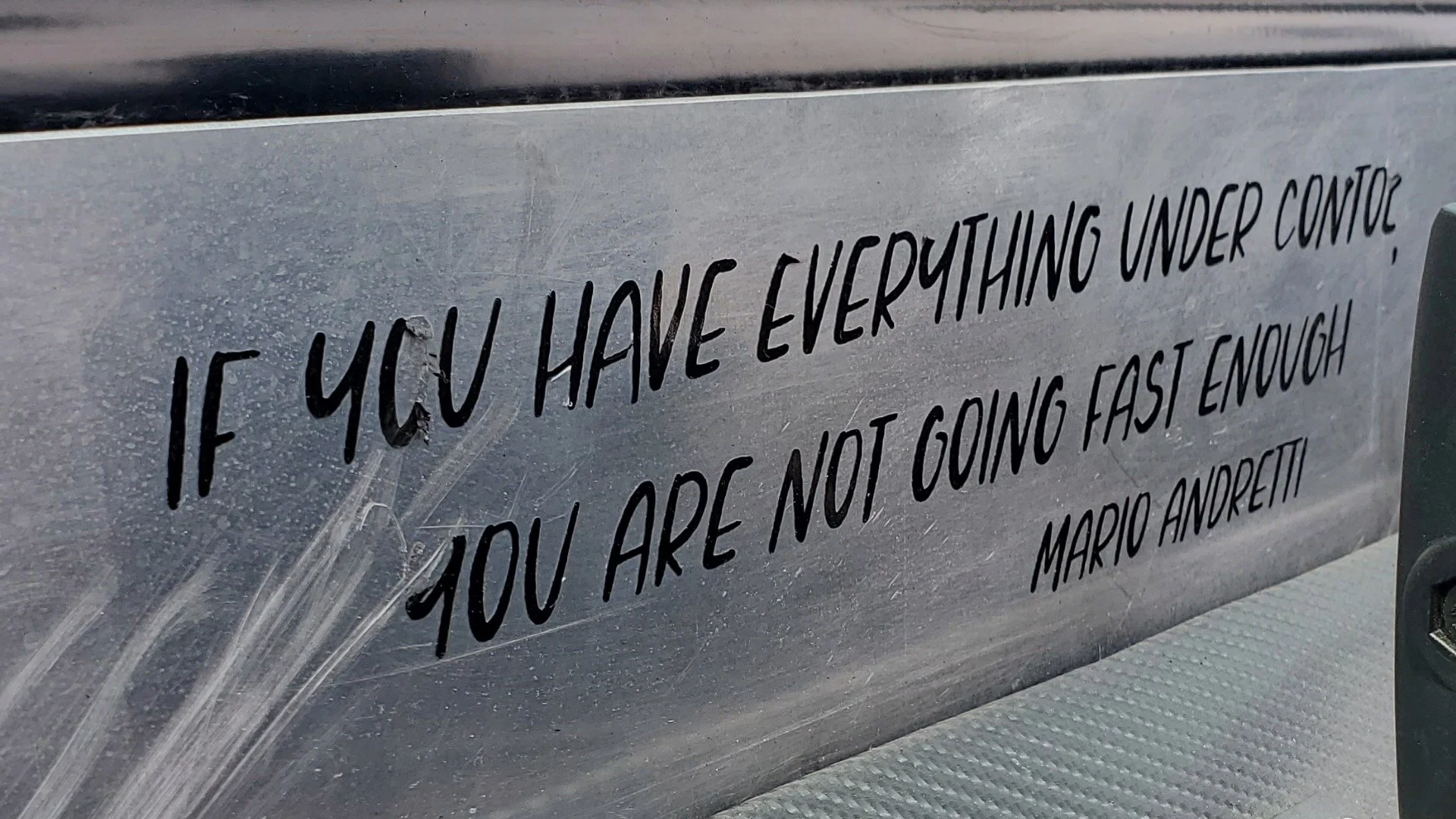
Does Mario Andretti have a point?
A Nissan Leaf Motor Inside a Custom Tube Frame: How the Drivetrain Works
At the heart of the Cricket is a Gen 3 Nissan Leaf motor controlled by the Thunderstruck VCU that controls the motor inverter. The Thunderstruck system gives Phil and Dave full tunability: throttle curve mapping, maximum torque limits, and the ability to dial the car down for a new driver or open it up for competition. Power output sits around 160 kW (215 HP) at peak, which is well within the battery's comfort zone. They have never come close to taxing the pack.
One of the more clever engineering decisions in the build was the transmission choice. Rather than running the standard Leaf single-speed open differential unit, they mated the Leaf motor to a Nissan Spec V gearbox, which is essentially a modified Maxima transmission with a factory limited-slip differential. Getting that LSD was a multi-year effort. They spent time chasing a Leaf-spec limited slip through Nissan's Western U.S. distributor, came close more than once, and ultimately found that the right part exists on the Japanese Amazon marketplace but cannot actually be ordered. The Spec V solution was the workaround that finally made the car drive like it should.
The difference was immediate. Before the LSD, the Cricket would spin a tire at 70 miles per hour under hard throttle on street tires. Not ideal. With the limited slip, the power goes down cleanly, and the car drives like a projectile.
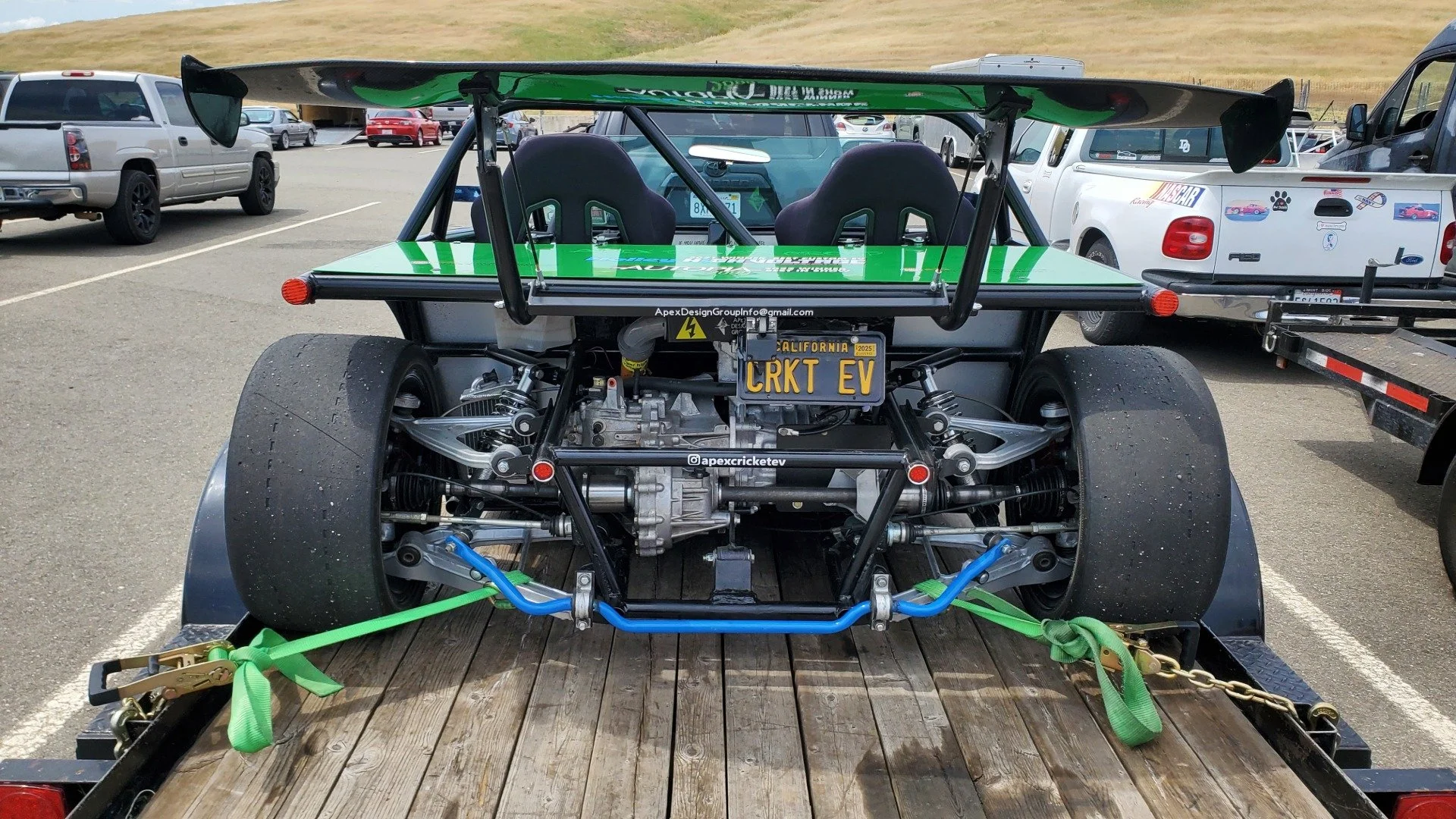
Nobody would guess the heart of this car is a Nissan Leaf
Getting a Homemade EV Race Car Street Legal in California
The Cricket is fully street legal, which is not a small thing to pull off with a custom tube-frame vehicle. Getting there meant going through a CHP inspection, where an officer verifies VIN numbers on any identifiable parts to confirm nothing is stolen. Dave drove up to the Auburn CHP office, figuring a smaller outpost might mean shorter lines. The officer doing the inspection accidentally drilled through the powder coat when installing the VIN plate. He signed off on the car anyway and sent Dave home.
Dave's wife noticed the scratched paint before he did. The paperwork was already signed. The car was legal.
Charging is handled on a simple 110V outlet with a 1500W charger. After a full day of autocross, the Cricket charges back up in just a few hours. Dave has never plugged into anything faster. The six 60V battery modules up front, linked through a Thunderstruck BMS, have never shown meaningful heat even under race conditions. The battery management system lets them monitor the voltage and temperature of all 96 cells individually through an LCD display in the cockpit.
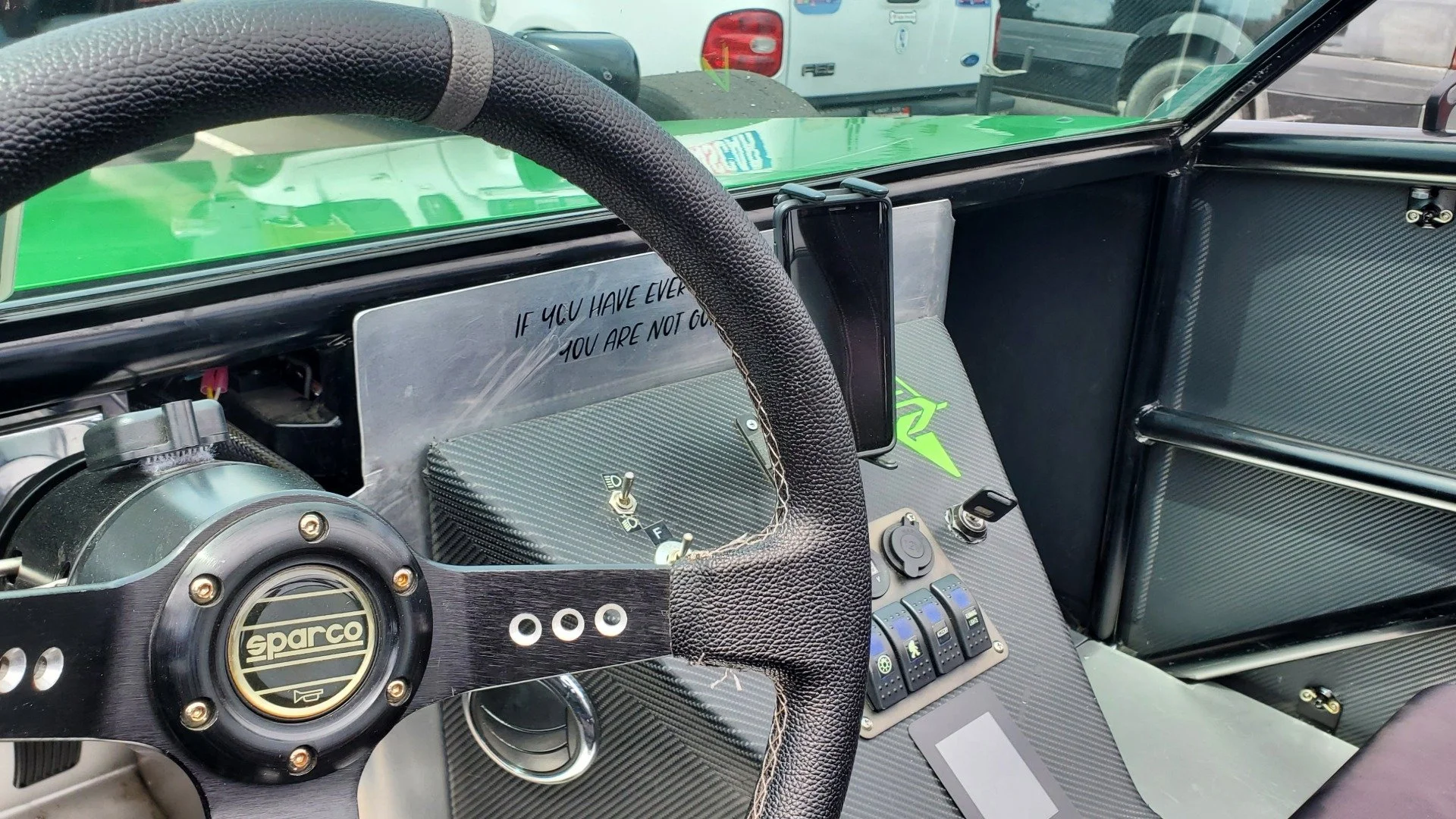
Sparco wheel and vent built into a carbon fiber bulkhead
What Happens When You Put It on a Course
The first autocross lap in the Cricket was the moment Phil and Dave knew they had built something real. They came around the first corner and the car just worked. Not golf-cart-worked. Race-car-worked. Since then, the team has been refining it: suspension geometry adjustments, shock travel re-centering, tire upgrades, and the drivetrain swap described above.
The Cricket has competed at Holly High Voltage, one of the larger EV-specific events in the country. At a field of roughly 200 Teslas and other electric cars, Dave took second in the speed agility trials. The car was built for about $20,000. Most of what it was beating cost ten times that.
Top speed at autocross is around 73 mph, which is fast for a cone course where you're sprinting between gates. With the six-speed transmission, there's headroom to push that number higher on a longer straight. The original single-speed Leaf setup had a theoretical top speed of 108 mph. The new gearbox opens up options they have not fully explored yet.
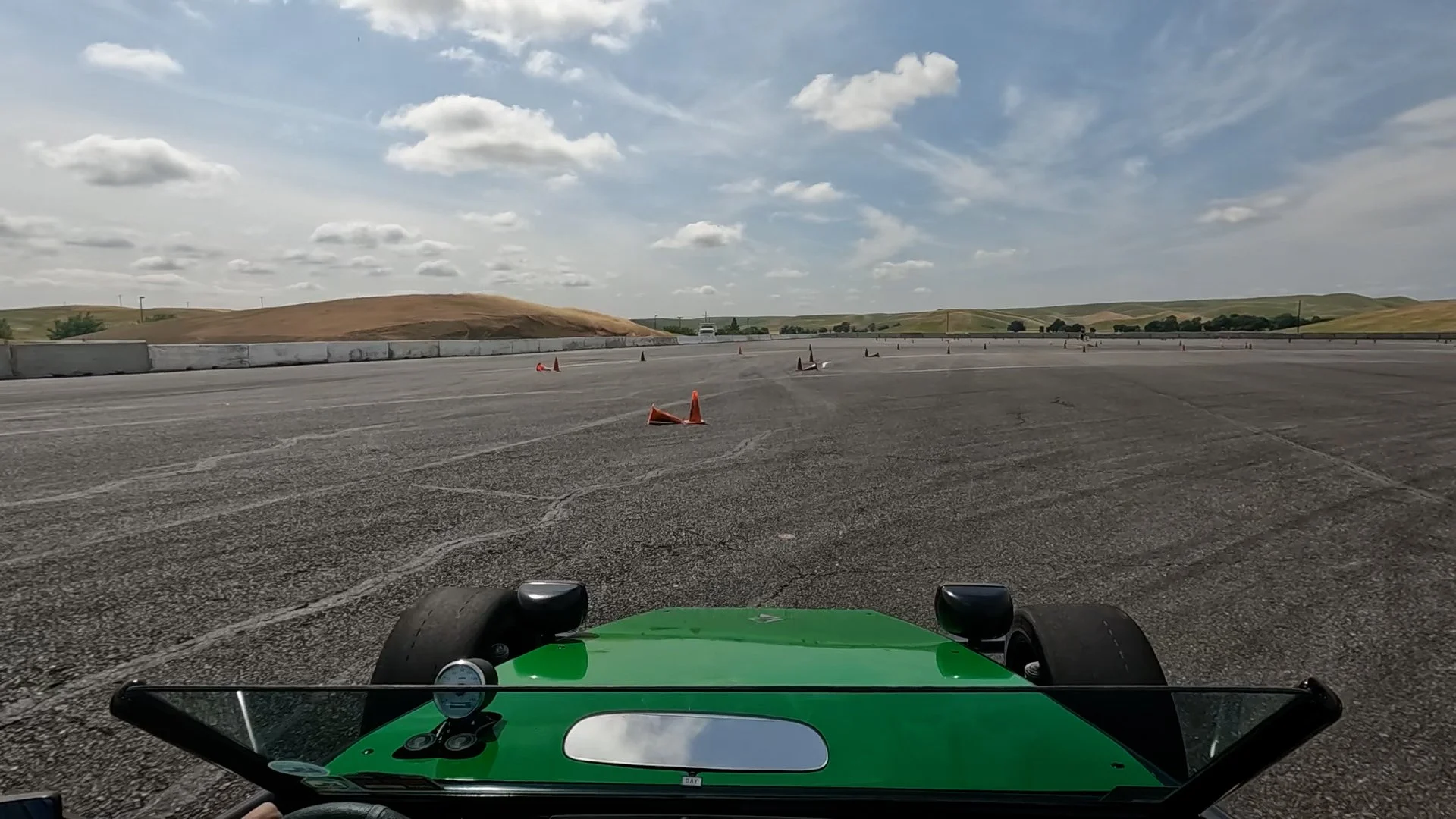
This 1700 pound race car locks in on the autocross course at Thunderhill
Why This Build Matters Beyond the Numbers
Phil and Dave are not professional engineers, though Dave spent his career as a utility consultant working with electrical systems. They are builders who figured things out, built their own CAD suspension models from publicly available data, over-spec'd their copper conductors because they were not sure how much load to expect, and tuned a Thunderstruck controller until the car behaved exactly the way they wanted.
Nobody asked for the plans when they showed up to events. But Phil says they have seen the Cricket spark other people to start their own projects. That is a more interesting outcome anyway. The point was never to sell kits. The point was to show what was possible with accessible parts, a shop, and the time to figure it out.
Dave has built other cars since: an electrified formula car with a chainsaw-motor chassis, and a 1927 Model T roadster that originally had a motorcycle engine hooked to a Toyota MR2 transmission. A fuel smell in his garage pushed him to go electric on that one too. It now does 55 mph and serves as a street rod. Making 400-volt connections, he says, is not as intimidating as it sounds. You just have to be careful and willing to learn.
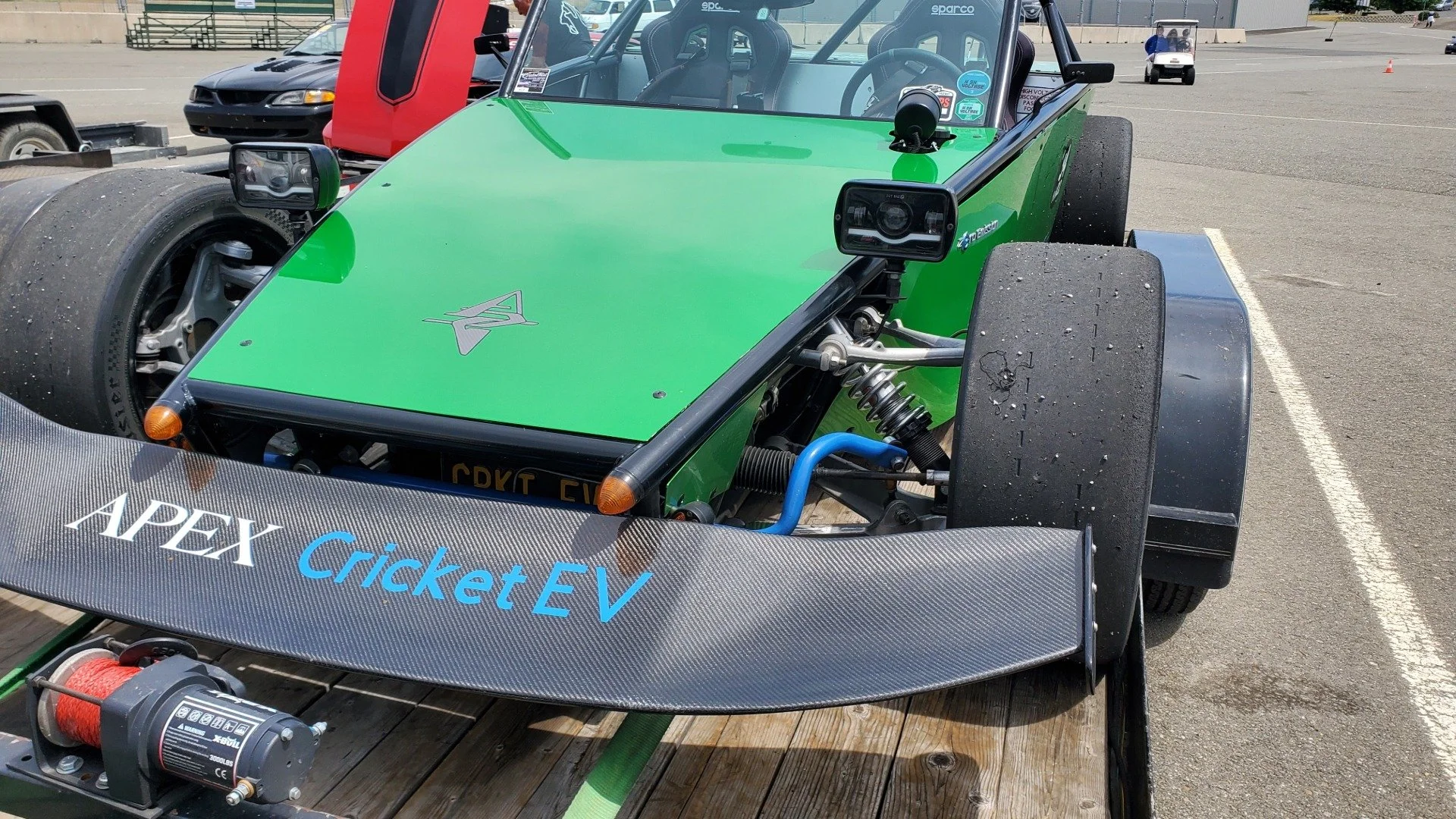
Carbon fiber wing in the front increases downforce for the Apex Cricket
Watch the Remastered Version
The original Apex Cricket video became my most-watched video on the EVTuners channel. Viewers asked to remove the background music so the interview could breathe, and so here you all are. This remastered version also includes an additional autocross run at the end and has been exported in 4K. Same car, same story, better watch.
You can follow the Apex Cricket on Instagram at @apexcricketev. For more builds, drivers, and EV innovators, subscribe to EVTuners on YouTube.